 Skip to content

Have you ever wondered what keeps your food fresh inside your refrigerator? That quiet hum you hear from your kitchen is actually the sound of a complex cooling system at work, with the compressor serving as its beating heart. In this comprehensive guide, we’ll explore exactly how a fridge compressor works to maintain the perfect temperature for preserving your groceries.
What Is a Fridge Compressor?

A fridge compressor is the primary component of your refrigerator’s cooling system. Located typically at the back or bottom of your refrigerator, this small but powerful device performs the crucial function of pressurizing refrigerant and circulating it throughout the cooling system.
The Heart of Your Refrigerator
The compressor serves as the main driving force behind the refrigeration cycle. Without it, your refrigerator would be nothing more than an insulated box, incapable of maintaining the cold temperatures necessary for food preservation. Think of it as the engine that powers the entire cooling process.
Key Functions of a Fridge Compressor:
- Pressurizes refrigerant gas to initiate the cooling cycle
- Circulates refrigerant throughout the refrigeration system
- Creates temperature differentials necessary for heat transfer
- Controls the cooling process by cycling on and off as needed
The Science Behind Refrigeration: How Does a Fridge Compressor Work?
Understanding how a fridge compressor works requires familiarity with the refrigeration cycle. This process follows the fundamental laws of thermodynamics, specifically that heat naturally flows from warmer areas to cooler ones.
The Complete Refrigeration Cycle
The refrigeration process is a continuous cycle that involves four main components working together:
- Compressor
- Condenser coils
- Expansion valve
- Evaporator coils
Let’s examine each step of this process in detail:
1. Compression Stage: Pressurizing the Refrigerant
The cycle begins when the compressor draws in low-pressure, low-temperature refrigerant gas from the evaporator. Using a piston or similar mechanism, the compressor significantly increases both the pressure and temperature of the refrigerant gas.
During this compression phase:
- The refrigerant molecules are forced closer together
- Kinetic energy increases, raising the temperature
- The refrigerant transforms into a high-pressure, superheated gas
- The compressor consumes electrical energy to perform this work
2. Condensation Stage: Releasing Heat

After compression, the hot, high-pressure refrigerant gas moves to the condenser coils typically located on the back or underneath your refrigerator. As the refrigerant travels through these coils:
- The gas releases heat to the surrounding environment (your kitchen)
- The refrigerant gradually cools and condenses into a high-pressure liquid
- Fans often assist this process by blowing air across the coils
- This is why the area behind your fridge often feels warm
3. Expansion Stage: Preparing for Cooling
The high-pressure liquid refrigerant next passes through an expansion valve (sometimes called a capillary tube). This narrow passage creates a sudden drop in pressure, causing:
- The liquid refrigerant to expand rapidly
- A significant temperature decrease
- Transformation into a cold, low-pressure mixture of liquid and gas
- Preparation for the final cooling stage
4. Evaporation Stage: Absorbing Heat
In the final stage, the cold refrigerant enters the evaporator coils inside your refrigerator. As warm air from your food items passes over these cold coils:
- The refrigerant absorbs heat from inside the refrigerator
- Interior temperature drops, keeping food fresh
- The refrigerant evaporates completely back into a gas
- Now a low-pressure gas again, it returns to the compressor to restart the cycle
This continuous cycle maintains the cold temperature inside your refrigerator, with the compressor acting as the critical driving force behind the entire process.
Types of Fridge Compressors: Performance Comparison
Not all refrigerator compressors are built the same. Different technologies offer varying levels of efficiency, noise, and performance. Understanding these differences can help you choose the right refrigerator or diagnose issues with your current appliance.
Common Types of Refrigerator Compressors
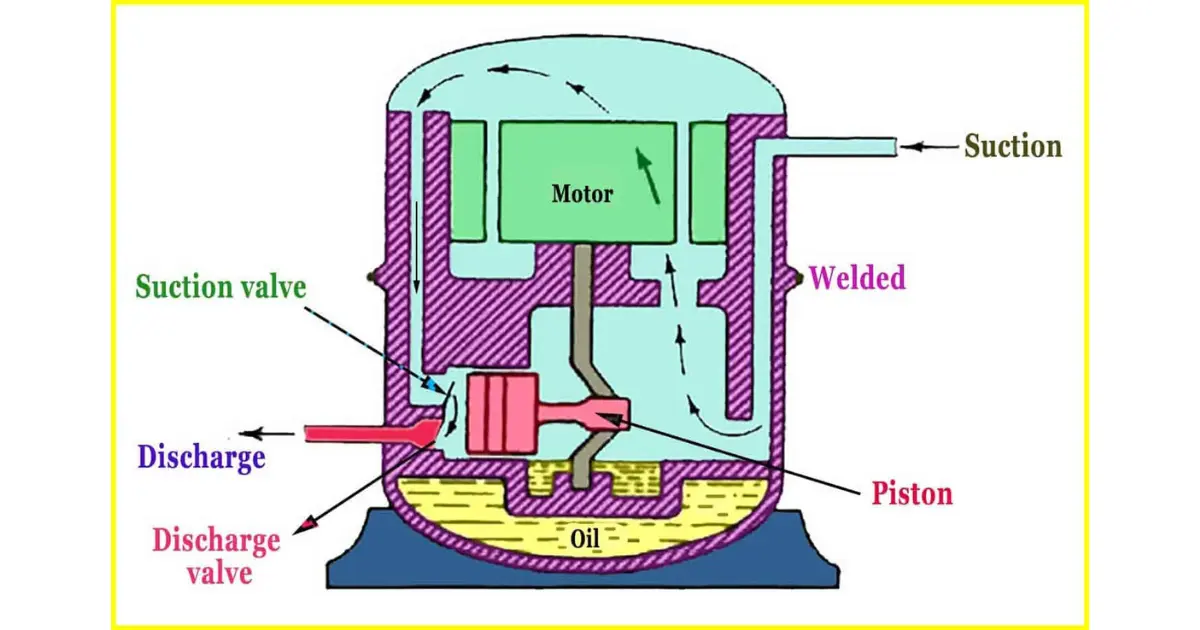
1. Reciprocating Compressors
These traditional compressors use a piston-cylinder mechanism similar to a car engine. The piston moves up and down, compressing refrigerant gas before sending it through the cooling cycle.
2. Rotary Compressors
Rotary compressors utilize rotating blades inside a cylindrical chamber to compress refrigerant smoothly and continuously, resulting in less vibration and quieter operation.
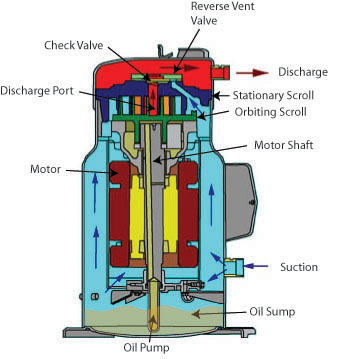
3. Scroll Compressors
Advanced scroll compressors use two interlocking spiral-shaped scrolls to compress refrigerant efficiently. One scroll remains fixed while the other orbits around it, creating compression pockets.
4. Inverter Compressors
The most modern technology, inverter compressors can adjust their speed based on cooling demand rather than simply turning on and off. This results in more consistent temperatures and energy savings.
Compressor Type Comparison Table
Refrigerator Compressor Types: Comparison Chart
| Compressor Type | Energy Efficiency | Noise Level | Lifespan | Cost | Best For |
|---|---|---|---|---|---|
| Reciprocating Compressor | ★★☆☆☆ Moderate | ★☆☆☆☆ Loud | ★★★☆☆ 10-15 years | ★★★★★ Low | Budget-friendly refrigerators, small to medium-sized units |
| Rotary Compressor | ★★★☆☆ Good | ★★★☆☆ Moderate | ★★★☆☆ 12-15 years | ★★★☆☆ Moderate | Mid-range refrigerators, quieter operation needs |
| Scroll Compressor | ★★★★☆ Very Good | ★★★★☆ Very Quiet | ★★★★☆ 15-20 years | ★★☆☆☆ High | Premium refrigerators, commercial applications |
| Inverter Compressor | ★★★★★ Excellent | ★★★★★ Ultra Quiet | ★★★★★ 15-20+ years | ★☆☆☆☆ Very High | High-end refrigerators, energy-conscious consumers |
| Linear Compressor | ★★★★★ Excellent | ★★★★★ Ultra Quiet | ★★★★★ 20+ years | ★☆☆☆☆ Premium | Luxury refrigerators, cutting-edge technology |
Note: Inverter compressors (highlighted) offer the best overall performance for most consumers, balancing energy efficiency, noise level, and longevity despite their higher initial cost.
Why a Properly Working Compressor Is Essential for Food Preservation
The fridge compressor plays a vital role in maintaining food safety and quality. Its proper functioning directly impacts how well your refrigerator preserves your groceries.
Temperature Control and Food Safety
A properly operating compressor maintains temperatures below 40°F (4°C), which is crucial for:
- Slowing bacterial growth – Most harmful bacteria multiply rapidly in the “danger zone” between 40°F and 140°F
- Extending food shelf life – Cold temperatures slow enzymatic activity that causes food deterioration
- Preventing foodborne illness – Consistent cooling reduces the risk of food contamination
Energy Efficiency and Environmental Impact

Modern compressor technology, especially inverter compressors, provides significant advantages:
- Reduced energy consumption – Variable speed operation uses up to 30-50% less energy
- Lower utility bills – More efficient cooling means less electricity usage
- Extended appliance lifespan – Less strain on components from frequent on/off cycling
- Environmental benefits – Lower energy usage reduces your carbon footprint
Signs Your Fridge Compressor Might Be Failing
Recognizing the early warning signs of compressor problems can help you address issues before they lead to complete failure and food spoilage.
Common Compressor Problem Indicators
- Unusual noises – Buzzing, clicking, or knocking sounds
- Inconsistent cooling – Food spoiling faster than normal or uneven temperature distribution
- Compressor running constantly without cycling off
- Excessive heat from the back of the refrigerator
- Higher electricity bills without changes in usage patterns
When to Call a Professional vs. When to Replace
For minor issues like unusual noises or slightly reduced cooling efficiency, professional repair might be the most cost-effective solution. However, if your refrigerator is over 10-15 years old or repair costs exceed half the price of a new unit, replacement might be the better option.
How to Maintain Your Fridge Compressor for Longevity
Proper maintenance can significantly extend the lifespan of your refrigerator compressor and prevent costly repairs.
Essential Maintenance Tips
1. Keep Condenser Coils Clean
Dust and debris on condenser coils force the compressor to work harder. Clean them every 6 months by:
- Unplugging the refrigerator
- Locating the coils (usually at the back or underneath)
- Using a vacuum cleaner with a brush attachment to remove dust
- Wiping down surrounding areas
2. Ensure Proper Ventilation
Your refrigerator needs adequate airflow to function efficiently:
- Leave 2-3 inches of space between the refrigerator and walls
- Ensure vents inside the refrigerator aren’t blocked by food items
- Keep the area around the refrigerator free from obstruction
3. Maintain Optimal Temperature Settings
Setting your refrigerator too cold forces the compressor to work harder:
- Keep the main compartment between 35-38°F (1.7-3.3°C)
- Set the freezer section to 0°F (-18°C)
- Use a refrigerator thermometer to verify temperatures
4. Avoid Overloading
Too much food restricts airflow and makes the compressor work overtime:
- Allow space between items for air circulation
- Don’t block internal air vents
- Let hot foods cool before placing them in the refrigerator
Frequently Asked Questions About Fridge Compressors
How long do refrigerator compressors typically last?
Most refrigerator compressors have a lifespan of 10-15 years with proper maintenance. Premium models with inverter compressors can sometimes last even longer.
Why does my fridge compressor make noise when it starts?
The initial noise when a compressor starts is normal and occurs due to the motor requiring more power to overcome inertia and begin the compression cycle. However, excessive or unusual noises may indicate problems.
Can I replace just the compressor instead of the entire refrigerator?
While technically possible, compressor replacement is often expensive. If your refrigerator is older, the cost of compressor replacement plus labor might approach or exceed the cost of a new, more energy-efficient model.
How much electricity does a fridge compressor use?
A refrigerator compressor typically accounts for about 80-90% of a refrigerator’s total energy consumption. Modern compressors, especially inverter types, are designed to be more energy-efficient than older models.
Is it normal for a fridge compressor to run constantly?
No. A properly functioning refrigerator should cycle on and off throughout the day. Constant operation can indicate problems like refrigerant leaks, dirty condenser coils, or failing door seals.
Conclusion: The Unsung Hero of Your Kitchen
The refrigerator compressor truly is the unsung hero of food preservation, working tirelessly behind the scenes to keep your food fresh and safe. Understanding how a fridge compressor works not only satisfies curiosity but also helps you:
- Make informed purchasing decisions when buying a new refrigerator
- Properly maintain your current appliance
- Troubleshoot potential issues before they become serious problems
- Appreciate the complex engineering that goes into modern refrigeration
With proper care and maintenance, your refrigerator compressor should provide many years of reliable service, keeping your food at the perfect temperature and reducing unnecessary food waste.
Remember that the next time you hear that familiar hum from your kitchen, it’s the sound of thermodynamic principles at work, orchestrated by the powerful yet compact compressor that makes modern refrigeration possible.
This article was last updated on April 3, 2025, to include the latest information on refrigerator compressor technology and maintenance best practices.
